Picture this: you’re in yet another meeting about a project that’s gone off the rails. Costs have exceeded the budget, the delivery date has been pushed back, and your team is on its last legs. As you listen to the usual excuses – not enough time, unexpected customer changes, or shortages of parts – you know deep down that the problem is bigger. It’s not just this one project; it’s the way your business operates.
Sound familiar? You’re not alone. But there is a solution.
The Problem Runs Deeper Than You Think
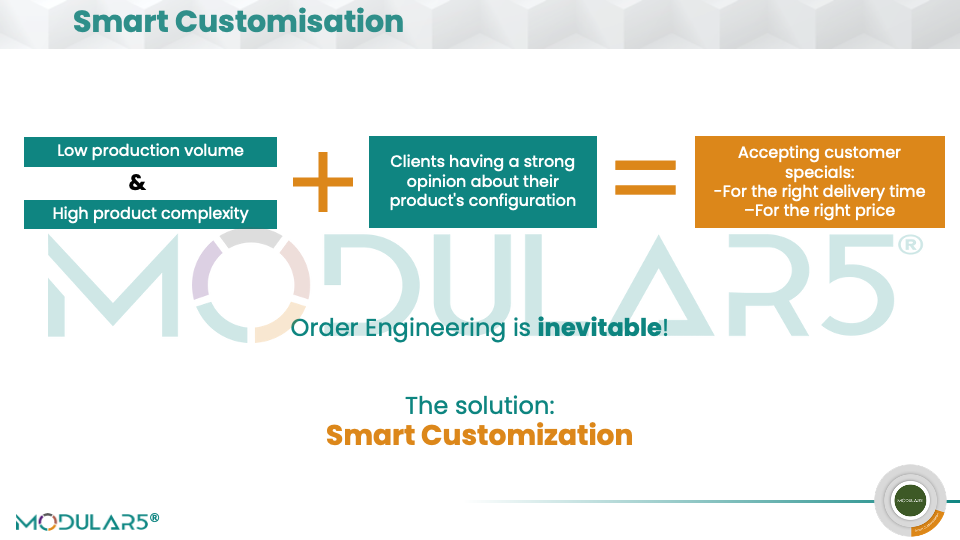
Many companies in markets with complex mechatronic products and low production volumes believe their challenges are unique. “Our customers demand customization,” they often say. That may be true, but customization doesn’t have to mean designing every product from scratch.
The real issue? Your organization lacks a structured, modular approach. You’re constantly reinventing the wheel, which drains time, money, and energy.
The solution? A modular product portfolio.
What is a Modular Product Portfolio?
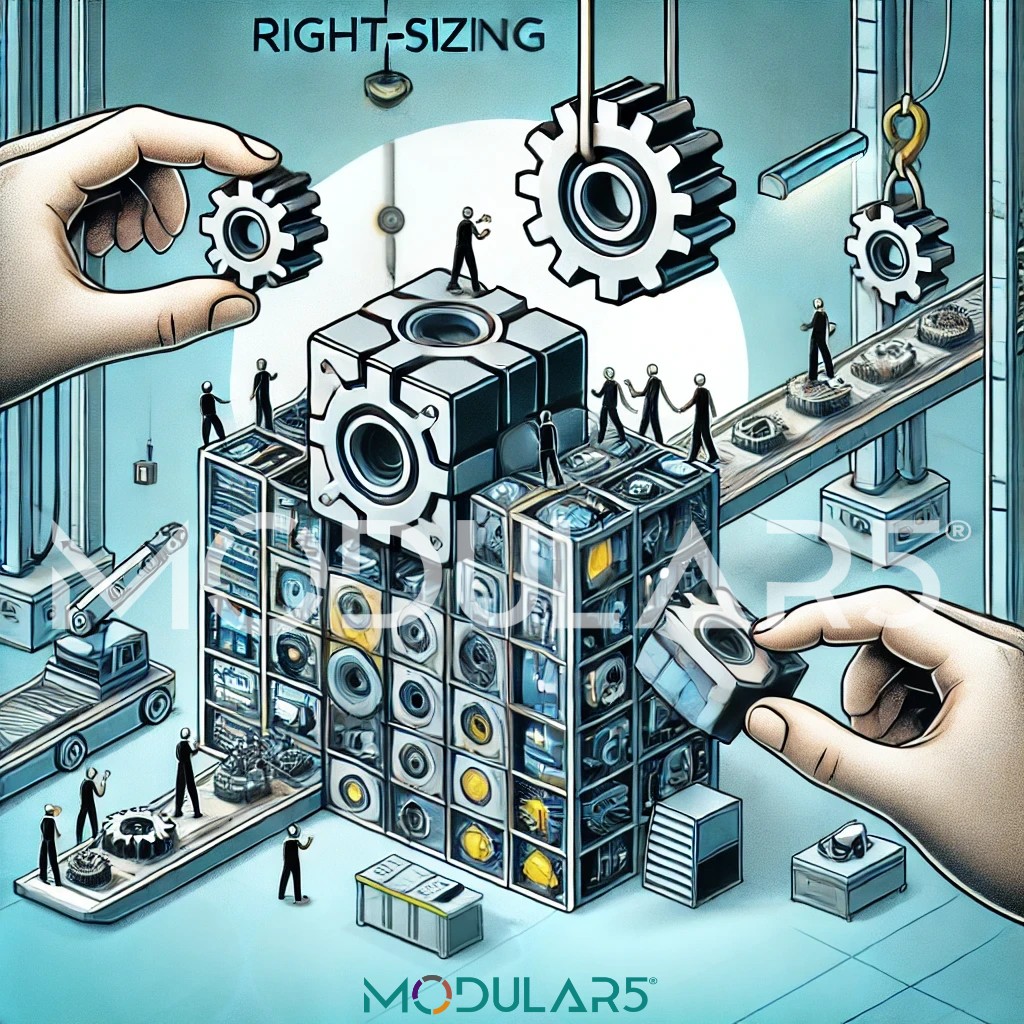
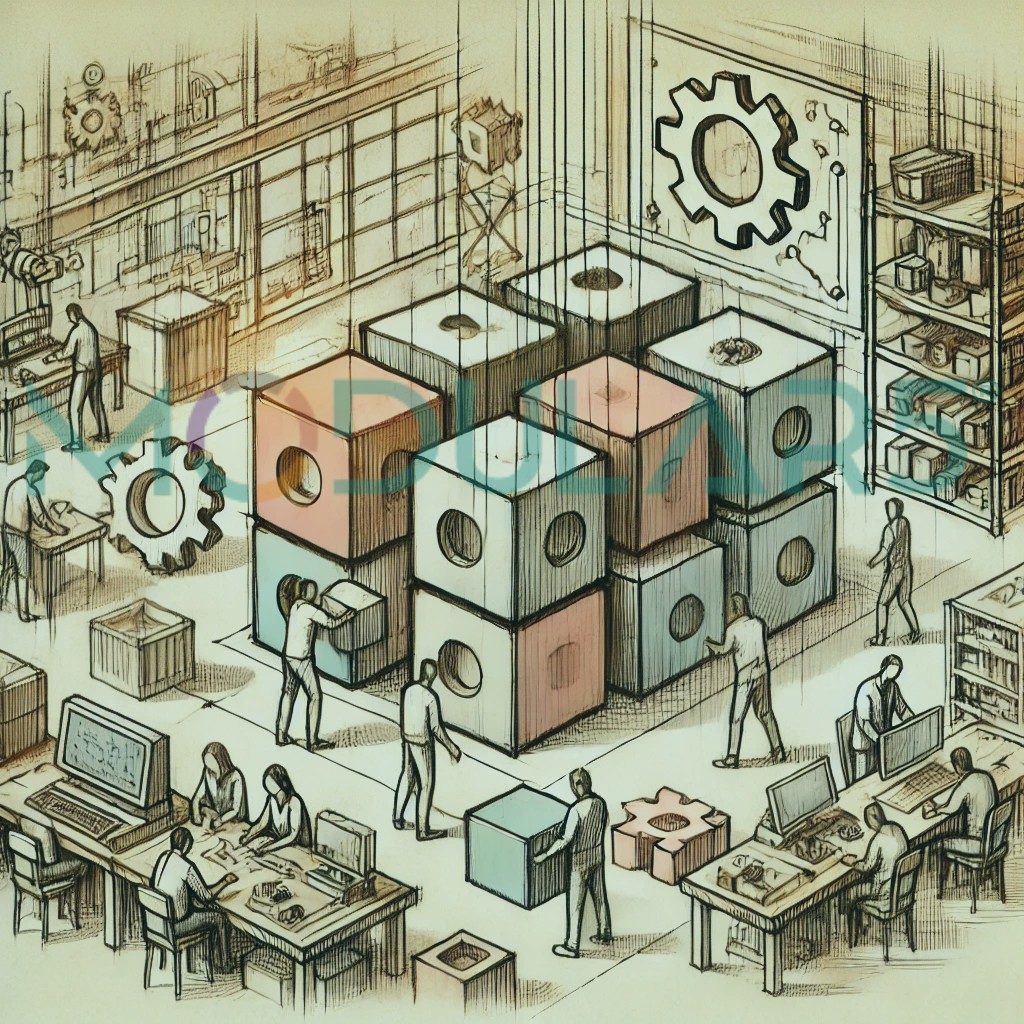
Think of LEGO bricks. Each piece fits seamlessly into a larger structure. Whether you’re building a car or a castle, the building blocks remain the same.
A modular product portfolio breaks your complex products into standard building blocks that can be combined flexibly. This allows you to meet customer needs without redesigning everything. However, it only works if all parts of your organization – sales, engineering, production, and service – are aligned.
Multidisciplinary Collaboration: The Key to Modularisation
A modular approach requires collaboration across all departments. Here’s how each team plays its part:
1. Sales: Sell Standard Options, Customisation as an Exception
The problem often starts with sales. Customers may ask for everything, but that doesn’t mean you should promise it all. Equip your sales team with a configurator that highlights standard options. This lets customers choose what they need without pushing engineering into overdrive.
A configurator also shifts the conversation with customers away from technical details. Instead of debating design specifics, customers choose functions to suit their needs, and the system selects the appropriate technical solution.
This ensures your team takes responsibility for solving the customer’s problem. The technical solutions offered by the modules are tried, tested, and proven. Contrast this with companies that create custom designs for every order. Each new design carries the risk of not functioning as intended, leading to delays and higher costs. As a result, customers want to know every detail, often drawing your best engineers into time-consuming discussions.
Example: A customer wants a machine with specific performance requirements. Using a configurator, the sales team can demonstrate which module combinations meet those needs. The result? Fewer engineering hours and quicker quotes.
2. Engineering: Focus on Building Blocks, Not Exceptions
In a modular approach, engineers design reusable modules rather than entire products. This makes designs more robust and reduces errors. By combining existing modules intelligently, you can save up to 90% of design time.
Engineers can release configured designs to production within days of receiving an order, freeing them to focus on customer-specific needs or product development and optimisation.
3. Production: Standardisation Speeds Up Processes
Building with standard blocks streamlines production. Fewer variations mean shorter lead times, lower costs, and more predictable delivery schedules.
The learning curve also means each subsequent product takes less time to produce. This increases margins and creates “free” extra capacity since the same machines can produce more output.
Long-term contracts with suppliers also become easier to manage, saving time and money on procurement.
4. Service: Simplified Maintenance
If a module breaks down, the service team often knows the cause before they even arrive on site. They can bring the right spare parts and tools, completing most repairs on the first visit.
Modules can be replaced without dismantling the entire machine, reducing downtime for customers and simplifying inventory management. This allows your service team to focus on what matters most: fast, efficient repairs.
From Theory to Practice: A Real-Life Example
Manufacturers of industrial mechatronic equipment often struggle with inefficiencies. Each customer request results in a unique design, leading to longer lead times, shrinking margins, and growing competition. Add the increasing complexity of products, and the challenges multiply.
After implementing a modular product portfolio, everything changed:
• 80% of customer requests were fulfilled with standard modules.
• Production lead times were cut by 40%.
• Service costs dropped by 50% due to simpler, faster repairs.
• Revenue often doubled, with significant margin improvements.
What starts as a solution to cost and capacity problems often becomes the key to growth.
The Real Cost of Not Going Modular
If you continue with business as usual, you’ll pay the price:
• Cost overruns will remain common. Each project creates new components that fill your warehouse but are rarely reused.
• Engineering capacity will evaporate. Your best people will spend time on repetitive tasks instead of innovation.
• Customers will leave. Longer lead times and higher costs make you less competitive.
Your competitors are already working modularly. Can you afford to fall behind?
Modularisation: More Than a Technical Choice
Modularisation isn’t a luxury; it’s a strategic necessity. It enables faster delivery, lower costs, and a better customer experience. It’s not just about efficiency – it’s about staying relevant in an increasingly competitive market.
What’s Your Next Step?
You now have a choice. Will you remain stuck in the inefficiencies of outdated methods, or will you embrace a modular approach to future-proof your business?
We have the tools, expertise, and experience to help you.
👉 Contact us today to find out how a modular product portfolio can transform your business.
The first step towards control and growth starts now. What will you choose?